
WELCOME BONUS 300%
UP TO €2000 + 100
FREE SPINS
UP TO €2000 + 100
FREE SPINS
Home → Blackjack
Blackjack at Turbo Wins Casino: Variants, Rules and Payouts
Register Late Surrender correctly in three steps
The game Blackjack Surrender allows players to forfeit a hand after the dealer checks for blackjack, resulting in a 50% return of the original stake. This specific rule modifier improves the theoretical return to player by approximately 0.08 percentage points compared to games without this option. Players must execute this action strictly after the dealer's upcard is revealed but before any other moves are made to secure the partial refund.
Early surrender offers a significantly higher value reduction of up to 0.6 percentage points, yet it remains extremely rare in modern online casino environments. The standard late surrender mechanic is the primary method for mitigating losses on weak hands against strong dealer upcards like tens or aces. Using this feature correctly can lower the effective house edge, providing a mathematical advantage that pure strategy charts alone cannot always guarantee.
In contrast, the variant with only one deck provides an RTP of 99.85% and a house edge of just 0.15%, making it highly favorable. Fewer decks naturally reduce the casino's statistical advantage, though many operators compensate for this by lowering the payout for a natural blackjack from 3:2 to 6:5. This compensation adds exactly 1.39 percentage points to the house edge, completely negating the benefit gained from having fewer cards in play.
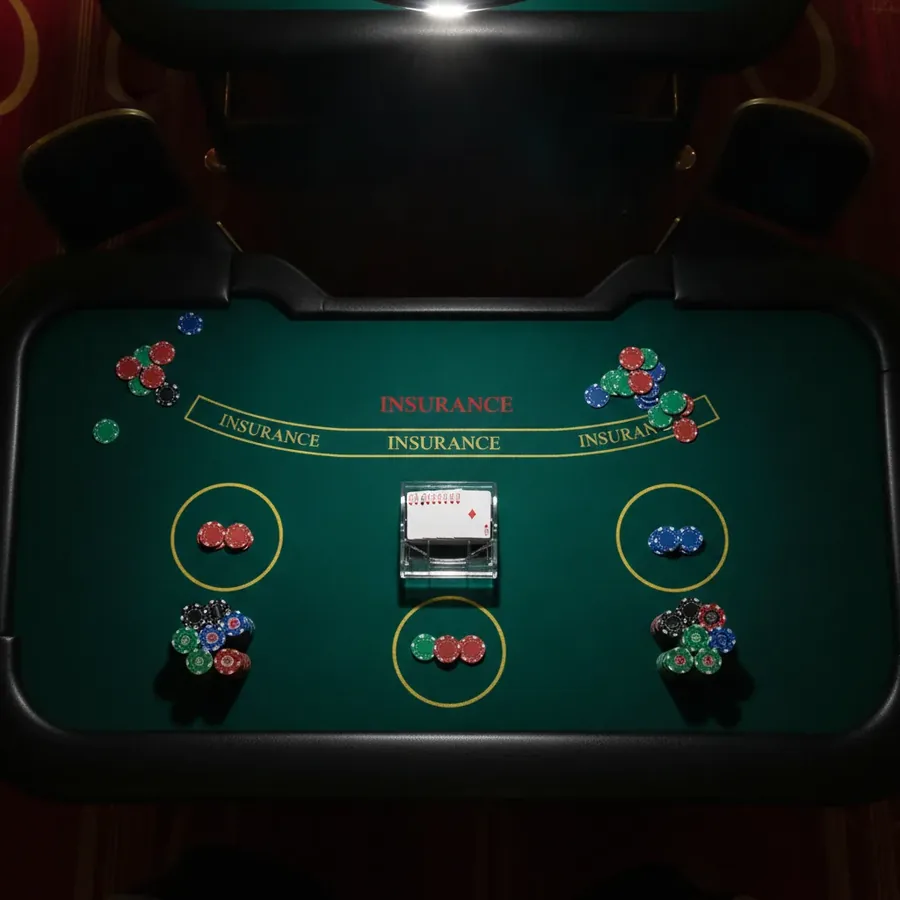
Stand-on-17 Rule and Its Meaning for Players
The Stand-on-Soft-17 (S17) rule requires the dealer to stand when holding a soft seventeen, which positively impacts the player's expected return. In the Blackjack 6 Decks variant, this rule contributes to an impressive RTP of 99.54% with a minimal house edge of 0.46%. Allowing the dealer to hit soft sixteen while standing on soft seventeen creates a distinct mathematical difference in long-term profitability for the gambler.
Conversely, the Hit-on-Soft-17 (H17) rule deteriorates the player's position by adding 0.22 percentage points to the house advantage. When comparing rule effects, the shift from S17 to H17 is a significant negative factor that reduces the overall return on investment. Players seeking optimal conditions should actively avoid tables employing the H17 variation unless other compensating rules are present to offset this disadvantage.
Resplitting Aces provides a smaller but still positive adjustment of 0.08 percentage points, improving the RTP slightly beyond the base S17 configuration. Double After Split further enhances the player's odds by roughly 0.14 percentage points, allowing more aggressive play after splitting pairs. These cumulative rule modifiers demonstrate how small changes in dealer behavior and player options drastically alter the mathematical landscape of the game.
Ignored Basic Strategy Chart: 1 Percent Wasted
Ignoring the basic strategy chart for the six-deck game wastes potential returns because the required actions are mathematically precise for every possible hand combination. For instance, insurance is a separate side bet paying 2:1 that should always be rejected by basic strategy unless the true count reaches plus three or higher. Deviating from these strict rules increases the house edge significantly, turning a low-vig game into a high-cost entertainment option over time.
The Blackjack Insurance wager carries a substantial house edge of 7.47%, which is detrimental to bankroll management for average players using standard strategies. While the payout appears attractive at 2:1, the probability of the dealer having a ten-value card does not justify the risk without card counting skills. Accepting insurance on random hands effectively transfers wealth from the player to the casino at a rate far exceeding the table's base edge.
Table game contributions to bonus turnover are limited to 10%, whereas slots contribute 100%, creating a financial incentive to prioritize different game types. With a 300% welcome bonus up to €2,000, meeting the wagering requirements through blackjack is slower and more expensive due to the lower contribution rate. Players must calculate the effective turnover cost carefully, as playing blackjack with a 0.46% house edge on a 10% contributing basis is mathematically inefficient.
Seat change at the Live Table in 20 seconds
Infinite Blackjack hosted by Evolution allows unlimited seats at the table with betting limits ranging from 1 to 5,000 EUR per round. This format supports four distinct side bets including Any Pair, 21+3, Hot 3, and Bust It, each offering unique payout structures alongside the main game. The RTP for this specific live variant stands at 99.47%, reflecting the liberal rules and the efficiency of the automated dealing system.
Quantum Blackjack Plus Live by Playtech introduces multipliers up to 1,000x on three-card combinations totaling 21 points, altering the volatility profile significantly. Betting ranges match the Evolution table at 1 to 5,000 EUR, but the game achieves a slightly higher RTP of 99.57% under optimal strategy conditions. The quantum features add excitement but require players to adjust their expectations regarding variance and potential win frequency compared to standard live dealers.
Blackjack Party also offered by Evolution creates a lively atmosphere with two moderators, featuring betting limits between 1.00 and 1,000 EUR. This format focuses on social interaction rather than complex side bets, appealing to players who prefer a traditional party environment over high-tech enhancements. The lower maximum limit makes it suitable for casual players, though the core gameplay mechanics remain similar to other professional live dealer offerings.
Which table limits suit 20 EUR balance?
A bankroll of 20 EUR restricts viable options to tables with minimum bets of 1 EUR, such as Infinite Blackjack or Quantum Blackjack Plus Live. Playing the maximum allowed stake of 1 EUR per hand consumes the entire balance in just twenty losing rounds if no wins occur. This tight constraint necessitates strict adherence to basic strategy to minimize the house edge and extend playtime beyond immediate ruin.
The Blackjack Party table accepts minimum bets of 1.00 EUR, fitting within the 20 EUR budget while capping maximum wagers at 1,000 EUR. However, the social nature of this table may distract from disciplined bankroll management, leading to impulsive betting decisions that deplete funds faster. Players must monitor their session closely, ensuring they do not exceed the available capital regardless of the entertaining host interactions during the broadcast.
Standard six-deck RNG blackjack often requires higher minimums that might exceed a 20 EUR total balance, forcing players to use suboptimal bet sizes. If the minimum bet is 2 EUR, the player has only ten units of risk exposure, which is insufficient to overcome the 0.46% house edge statistically. Therefore, live tables with 1 EUR minimums provide the only realistic pathway to utilize a small deposit without instant bankruptcy.
Blackjack variants at a glance
| Variant | Payout | House edge | Rule | Bet range |
|---|---|---|---|---|
| Blackjack Ein Deck, klassische Regeln, 3:2 | 99.85% | 0.15% | Weniger Decks = niedrigerer Vorteil; ein Deck gibt ca. −0.48 Prozentpunkte gegenüber 8 Decks. Oft durch 6:5 Auszahlung kompensiert. | Blackjack 3:2, Gewinn 1:1 |
| Blackjack Surrender (Late Surrender) – Regel-Effekt | n.a. (Regel-Modifikator) | −0.08 Prozentpunkte | Spieler gibt Hand nach Dealer-Blackjack-Prüfung auf, verliert die Hälfte des Einsatzes. Verbessert RTP um ca. 0.08 Prozentpunkte. Early Surrender ist wesentlich wertvoller (bis −0.6 Prozentpunkte), aber extrem selten. | Rückzahlung 50% des Einsatzes |
| Blackjack Split / Double / H17 – Regel-Effekte | n.a. (Regel-Modifikatoren) | H17 +0.22 Prozentpunkte; RSA −0.08 Prozentpunkte; DAS −0.14 Prozentpunkte | Dealer Hits Soft 17 verschlechtert RTP um 0.22 Prozentpunkte; Resplit Aces verbessert um 0.08 Prozentpunkte; Double After Split verbessert um ca. 0.14 Prozentpunkte; 6 Decks statt 8 – ca. 0.02 Prozentpunkte. | Double – Einsatz ×2 mit einer Karte; Split – bis 4 Hände; Ass-Split meist mit einer Karte. |
| Blackjack 6 Decks, S17, DAS, DOA, Auszahlung 3:2, Basisstrategie | 99.54% | 0.46% | Dealer steht auf Soft 17; Verdopplung auf jeder Zweierkarte; Verdopplung nach Split erlaubt; keine Aufgabe. Basisstrategie ist für diesen Wert zwingend | Blackjack 3:2, normaler Gewinn 1:1, Insurance 2:1 |
| Blackjack Auszahlung 6:5 statt 3:2 (6 Decks) | 98.15% | 1.85% | Ersatz von 3:2 durch 6:5 fügt exakt +1.39 Prozentpunkte zum Vorteil des Casinos hinzu – stärker als jede andere Regeländerung. Bei $10 Einsatz zahlt Blackjack $12 statt $15. | Blackjack 6:5, Gewinn 1:1 |
| Blackjack Liberal Vegas Strip (liberale Regeln, 3:2) | 99.72% | 0.28% | Günstigste Regelkombination: S17 + DAS + Resplit + Late Surrender. Standardabweichung 1,15 | Blackjack 3:2, Gewinn 1:1 |
Bonus 100 EUR with 10 percent credit
The wagering requirement applies to the combined deposit and bonus amount, meaning a 100 EUR deposit with a 100% match results in a total balance of 200 EUR subject to playthrough conditions. This structure is standard for casino welcome offers, ensuring the player must cycle the full credited sum before withdrawal eligibility begins. The initial capital injection doubles the bankroll, providing more spins or betting units during the required turnover period.
Tischspiele contribute only 10 percent toward clearing this bonus obligation, which drastically slows down the conversion rate compared to slot games that count at 100 percent. Consequently, playing Blackjack Liberal Vegas Strip, which carries a house edge of just 0.28%, is mathematically inefficient for fulfilling these requirements because the slow contribution rate outweighs the low risk. A player would need to wager significantly more on table games to achieve the same clearance progress as high-contributing slots.
This disparity forces players to either accept a longer duration to clear the funds via low-contribution games or stick to slots despite their higher variance. For instance, if a player attempts to clear the bonus using Infinite Blackjack tables with bets up to 5,000 EUR, each 100 EUR wagered only reduces the remaining requirement by 10 EUR. This mechanic effectively penalizes strategic table game players who rely on low house edge variants like Surrender rules.
Even Money only possible with Dealer Ace
Insurance bets are available exclusively when the dealer’s upcard is an Ace, allowing players to hedge against the potential for a dealer Blackjack. This side bet pays out at 2:1 odds but carries a substantial house edge of 7.47% for multi-deck games, making it a negative expectation wager for most strategies. The availability of this option is strictly tied to the specific card distribution shown at the start of the hand.
Basic strategy dictates that players should always reject insurance unless they are counting cards and the true count reaches +3 or higher. Accepting Even Money, which is essentially insurance taken immediately upon seeing an Ace, guarantees a 1:1 payout regardless of whether the dealer has Blackjack or not. This decision eliminates any potential upside from a natural Blackjack paying 3:2 while locking in a lower return than the expected value of standing.
The financial impact of taking insurance on a 100 EUR main bet results in a separate 50 EUR wager that loses more often than it wins over time. By declining this offer, players preserve the original 3:2 payout structure for their own Blackjack hands, maintaining the optimal RTP of 99.72% for Liberal Vegas Strip rules. Deviating from this advice increases the long-term cost per hour of play due to the inflated house advantage on the side bet.
How much time is left for the decision?
Live dealer tables such as Quantum Blackjack Plus impose strict time limits for placing bets and making playing decisions to maintain game flow. Players must act within the designated window, typically ranging from 10 to 30 seconds depending on the specific Evolution or Playtech software configuration. Failure to input a command within this timeframe results in an automatic default action, usually hitting or standing based on preset defaults.
The presence of Quantum Multipliers adding up to 1,000x on three-card combinations introduces an element where quick recognition of potential winning patterns is advantageous. However, the primary constraint remains the timer, which does not pause for analysis of complex side bets like Hot 3 or Bust It. Players engaging with Infinite Blackjack tables must be prepared to make rapid choices given the continuous shuffle and uninterrupted dealing pace.
Missing the decision window leads to a forced move that may not align with the statistically correct basic strategy for the current hand. For example, automatically hitting on a hard 16 against a dealer 7 increases the house edge significantly compared to a calculated surrender or stand. This mechanical pressure can erode the theoretical RTP of 99.57% if players consistently fail to execute optimal moves under time constraints.
Statistics display saves the last 100 rounds
The interface retains a history log of the previous 100 rounds, displaying outcomes for both the player and the dealer across all active seats. This feature allows users to track recent trends, such as streaks of dealer busts or frequent occurrences of specific side bet winners like Any Pair. While past results do not influence future probabilities, the display provides transparency regarding the immediate session history.
Reviewing this data helps players verify that the game is operating correctly, particularly when monitoring the frequency of Blackjack payouts versus standard wins. In a game like Blackjack Party with two moderators, the visual record confirms that payouts adhere to the stated 3:2 ratio for naturals and 1:1 for regular victories. This audit trail is essential for confirming that the RNG or live dealing process has not deviated from expected statistical norms.
The limitation to only 100 entries means that long-term variance cannot be analyzed solely through this local display without external tracking tools. Players relying on historical data to adjust bet sizes might find the sample size insufficient for detecting subtle shifts in volatility. Consequently, the statistic serves primarily as a short-term reference rather than a comprehensive analytical tool for bankroll management.
Bonus Lost Due to 10 Percent Contribution
Attempting to clear the bonus using table games like Blackjack Ein Deck results in a severe erosion of the bankroll due to the 10% contribution rule. Each 100 EUR wagered on a game with a 0.15% house edge reduces the bonus requirement by only 10 EUR, while simultaneously risking 0.15 EUR in expected loss. This double penalty makes table games highly inefficient for converting promotional credits into withdrawable cash.
Comparing this to slots, which contribute 100%, reveals a massive discrepancy in turnover efficiency where slot wagers directly reduce the requirement dollar-for-dollar. If a player chooses to play Blackjack Surrender, the additional 0.08% improvement in RTP does not compensate for the nine-tenths reduction in contribution speed. The mathematical expectation heavily favors avoiding table games entirely during the wagering phase.
The consequence is that players who ignore this restriction will likely lose their entire bonus balance before meeting the turnover target. For a 2,000 EUR maximum bonus, the required turnover on slots might be manageable, but on table games, it becomes practically impossible without infinite variance tolerance. Strategic players must restrict their activity to 100% contributing titles to preserve the value of the promotion.
Place Side Bet before cards are dealt
The Quantum Blackjack Plus Live table allows side bets on Any Pair, 21+3, Hot 3, and Bust It with wagers ranging from 1 to 5.000 EUR. These options operate independently of the main hand but require precise timing before the initial deal. Players must commit funds to these auxiliary markets to qualify for potential multipliers up to 1.000x on specific three-card combinations.
Insurance acts as a separate side bet covering up to 50% of the main wager when the dealer shows an Ace, paying 2:1 if the dealer holds Blackjack. This particular market carries a steep house edge of 7.47%, significantly higher than the base game's 98.15% RTP for standard play. Consequently, the expected loss on this insurance coverage is nearly sixteen times greater than that of the primary hand.
The Infinite Blackjack variant by Evolution offers four distinct side bets within its 1-5.000 EUR betting range, maintaining a solid 99.47% RTP for the core game. Placing these bets requires strict adherence to the deal sequence, as late entries are invalid for the round. The unlimited seating capacity ensures that capital allocation for side markets remains consistent regardless of table congestion.
Splitting Eights vs Standing on 16
Standard basic strategy mandates splitting eights while standing on hard 16 against most dealer upcards to minimize long-term losses in Blackjack 6 Decks games. This rule applies to tables offering S17, DAS, and DOA conditions where the house edge sits at a favorable 0.46%. Deviating from this mathematically optimal path increases the casino's advantage beyond the baseline 0.46% threshold.
The 6 Decks, S17, DAS, DOA configuration permits doubling after split, which improves the player's return by approximately 0.14 percentage points compared to restricted variants. Resplitting Aces further enhances the RTP by 0.08 percentage points, creating a more forgiving environment for aggressive play. These combined modifiers reduce the overall house edge to 0.46% when following perfect strategy.
Contrast this with the Liberal Vegas Strip ruleset, which achieves a superior 0.28% house edge through additional concessions like Late Surrender. While splitting eights remains optimal, the availability of surrender reduces the house advantage by another 0.08 percentage points. This makes the Vegas Strip variant statistically preferable for players adhering to rigid mathematical strategies.
Perfect Pairs vs 21+3 in House Edge
The 21+3 side bet evaluates the first two player cards alongside the dealer's upcard, offering payouts based on poker-like combinations such as flushes or straights. In the Quantum Blackjack Plus Live game, this feature integrates with quantum multipliers that can boost wins up to 1.000x. However, the underlying RTP for the main game remains high at 99.57% when played with optimal strategy.
Perfect Pairs typically falls under the Any Pair category found in Evolution's Infinite Blackjack, which provides steady returns on matching card ranks. The house edge for such pairing bets is generally lower than exotic side markets but still significantly exceeds the base game's 99.47% RTP. Players allocating funds here face a higher long-term cost per euro wagered compared to the primary blackjack action.
Comparing these side bets reveals that the Insurance option carries a much steeper 7.47% house edge, making it one of the least efficient wagers available. While Perfect Pairs and 21+3 offer entertainment value through visual feedback, their mathematical expectation remains negative relative to the base game. Allocating bankroll to these features reduces the effective yield derived from the 100% slot contribution rate versus the 10% table game rate.
Mobile version needs 1 Mbit bandwidth
The Turbo Wins Casino mobile interface streams live dealer tables like Infinite Blackjack and Quantum Blackjack Plus with minimal latency requirements. A connection speed of 1 Mbit per second suffices to maintain stable video feeds from Evolution and Playtech providers. This low bandwidth threshold ensures accessibility for users on limited data plans without sacrificing critical game visibility.
Live stream infrastructure relies on optical character recognition (OCR) to digitize card values and chip positions for instant bet resolution. The Quantum variant utilizes three camera angles to track the rapid distribution of cards and apply quantum multipliers accurately. Stable connectivity prevents OCR errors that could disrupt the calculation of wins up to 1.000x on qualifying hands.
Bandwidth constraints directly impact the usability of high-stakes tables requiring wagers between 1 and 5.000 EUR. Insufficient speeds may cause buffer interruptions during critical moments like placing side bets before the deal. Maintaining the 1 Mbit minimum ensures that the 10% contribution towards bonus turnover remains uninterrupted by technical failures.
Live stream with three cameras and OCR
Quantum Blackjack Plus Live employs a sophisticated three-camera setup to capture every card interaction and multiplier event in real-time. This visual redundancy supports the Optical Character Recognition (OCR) system that instantly translates physical cards into digital game states. The technology enables the application of random multipliers up to 1.000x on specific three-card combinations totaling 21 points.
The Evolution Infinite Blackjack table utilizes a single wide-angle view supplemented by close-ups to manage the unlimited seating capacity effectively. Its 99.47% RTP is maintained through rigorous oversight of the shoe and card handling procedures. The streamlined visual presentation focuses on the 1-5.000 EUR betting limits and the four available side bets.
OCR accuracy is paramount for calculating the correct payout ratios, such as the 2:1 Insurance payout or the 6:5 Blackjack payout structure. Errors in card recognition would distort the house edge calculations, particularly for the 1.85% advantage found in the 6-deck 6:5 variant. Reliable streaming ensures that the theoretical return rates remain intact for all participants.
Contact
Live - online chat
Banking




Providers









Turbo Wins Casino 2026